The red signal
The Secret of ChimneysThe red signal is Anthony Cade’s recurring railway metaphor for a danger he sees clearly yet feels compelled to meet. It joins his appetite for risk to his attraction to Virginia Revel, turning a warning light into an image of desire that presses forward against both caution and convention.
The Metaphor of Warning
The image first appears as Anthony reflects on people who fail to respond as an ordinary, well-regulated locomotive would: seeing a red light, it slows or stops. He casts himself as an exception, “born colour-blind” to that signal. The metaphor is not ignorance of danger; he knows that forging ahead ends in disaster and even concedes that the resulting harm is deserved, since such behavior is “bad for traffic generally.” His serious tone makes the confession more than a boast: he presents risk-taking as a pattern whose consequences extend beyond himself.
Attraction and Foreknowledge
Anthony later applies the image directly to Virginia. Asked whether he regrets meeting her, he answers that he does not, calling his response to her “the red signal again.” He recalls that from their first meeting in Pont Street he knew the attachment would hurt him, yet describes her face as exerting an almost magical attraction. The warning and the desire arrive together: he anticipates pain but does not treat that foreknowledge as a reason to withdraw.
Risk, Restraint, and the Scene’s Irony
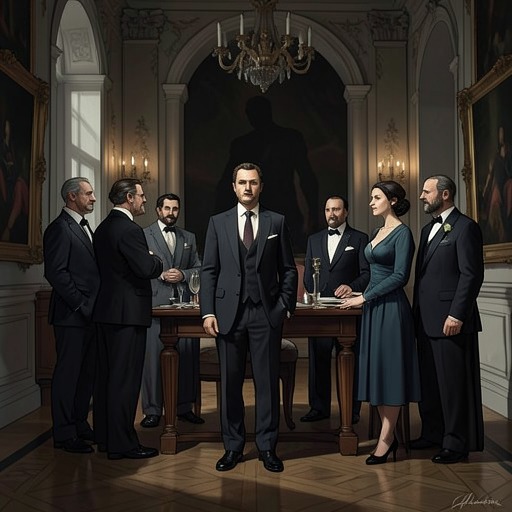
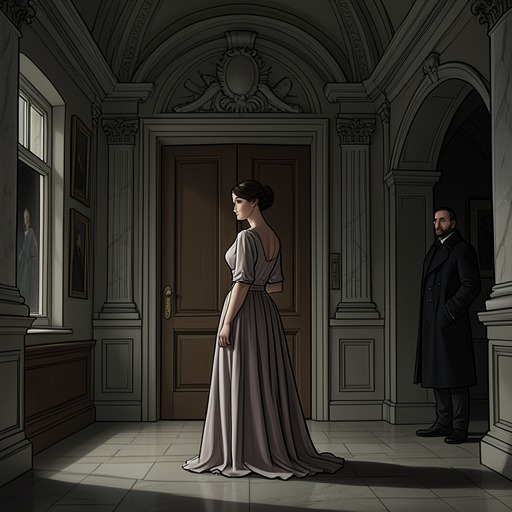
Anthony imagines a respectable, prosperous marriage for Virginia and a return to his own disreputable life, while promising himself a kiss before they part. The declaration makes his expected separation sound settled, but his insistence on one final act reveals how little the warning governs his conduct. Virginia points out that he cannot kiss her then because Superintendent Battle is watching from the library window. The scene places Anthony’s impulse under both romantic restraint and the literal gaze of authority, giving the metaphor a social as well as personal edge.
Recurrence and Narrative Function
The phrase also resonates with Anthony’s later discovery of the rose garden: confronted with a serious problem, he suddenly recognizes that the garden is the answer and hurries there by a circuitous route. The wording is not repeated in that moment, but its pattern of perception followed by forward movement recurs. Across these uses, the red signal names the tension between recognizing a warning and acting despite it; it gives Anthony’s romantic confession the same language of risk that colors his conduct elsewhere.